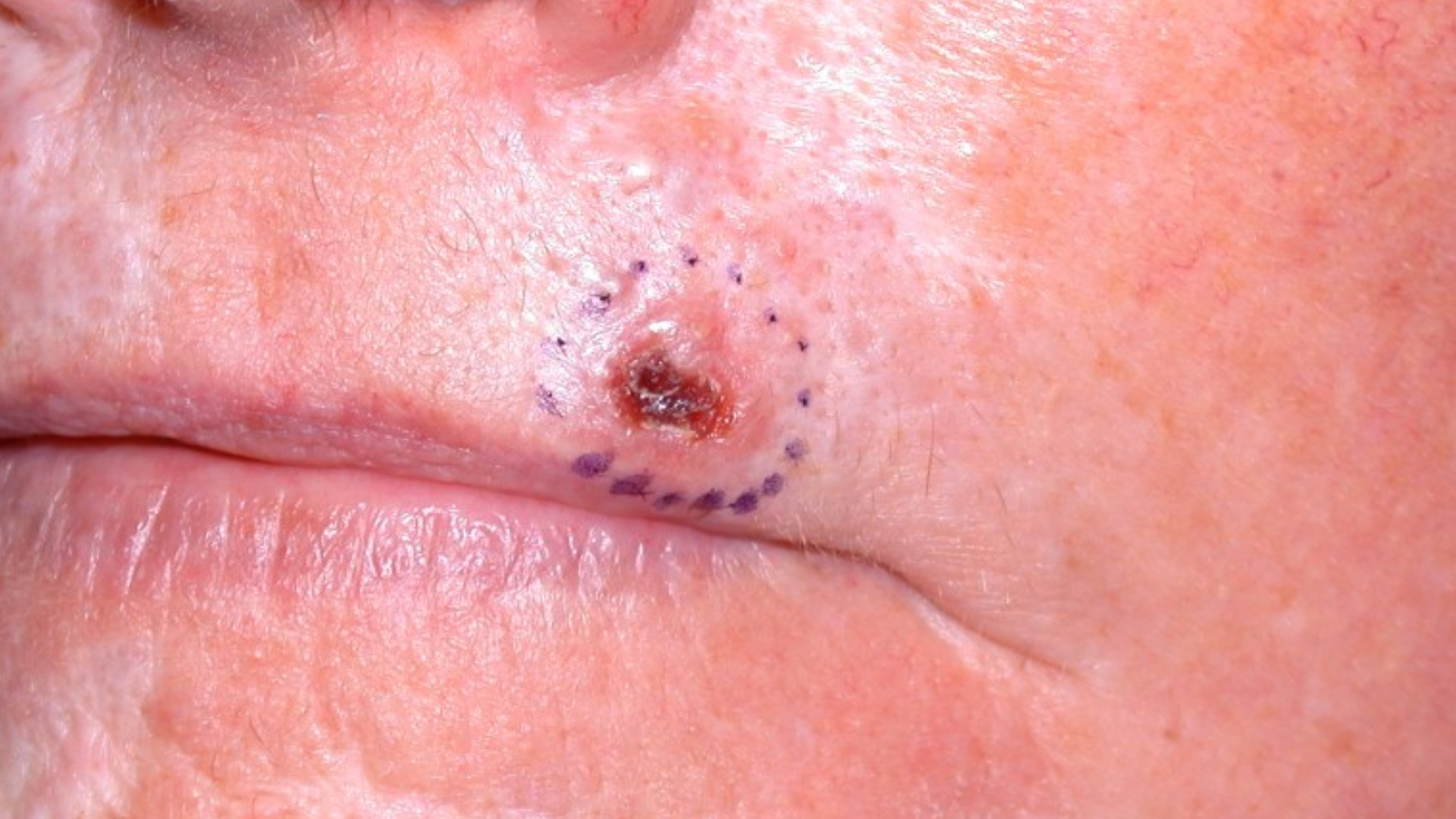
What Is Basal Cell Skin Cancer (Basal Cell Carcinoma)?
Basal Cell Skin Cancer (Basal Cell Carcinoma) is the most common form of skin cancer, originating from basal cells—small, circular cells in the skin’s outermost layer (epidermis). These abnormal basal cells proliferate uncontrollably, driving tumor formation. Although it typically grows slowly and seldom metastasizes, it can cause extensive damage to surrounding tissues if left untreated.
Cancer cells, including those in Basal Cell Carcinoma (BCC), exhibit distinctive metabolic alterations, prominently the Warburg effect—a phenomenon where malignant cells rely excessively on glycolysis, consuming glucose up to 200 times faster than normal cells, regardless of oxygen availability.
Understanding Basal Cell Skin Cancer (Basal Cell Carcinoma)
BCC typically develops on sun-exposed areas such as the face, neck, scalp, shoulders, and back. This strong correlation with ultraviolet (UV) radiation exposure signifies the need for vigilant protection and regular skin evaluations, especially among individuals with fair skin, blue eyes, red or blonde hair, and those who burn rather than tan.
- Commonly appears as a pearly, translucent bump, often with visible blood vessels.
- May present as flat, scaly patches( resembling eczema or psoriasis).
- Advanced lesions can grow into open sores, ulcers, or deeper skin layers and underlying tissues like cartilage or bone.
The World Health Organization (WHO, 2024) reports basal cell carcinoma affects roughly two million people globally each year, with rising incidence rates in Asian countries such as Hong Kong, owing in part to increased UV ray exposure from prolonged outdoor activities without adequate sun protection.
Understanding the emotional and physical burdens of diagnosis and treatment helps manage the condition effectively. Patients often face emotional distress, anxiety surrounding potential disfigurements, and concerns about recurrence, significantly impacting quality of life. Effective care strategies must, therefore, blend medical innovation with empathetic support.
Causes and Risk Factors of Basal Cell Skin Cancer (Basal Cell Carcinoma)
Identifying the underlying causes and risks for Basal Cell Skin Cancer (Basal Cell Carcinoma) is paramount for proactive prevention and clinical awareness.
Genetic Factors
Basal cell carcinoma displays specific genetic susceptibilities. Individuals with rare genetic disorders such as Gorlin syndrome (Nevoid Basal Cell Carcinoma Syndrome), characterized by PTCH1 gene mutations, demonstrate higher susceptibility to developing BCC through early life and multiple body-site occurrences.
- Mutation in DNA repair genes increases BCC susceptibility due to impaired cell regeneration capabilities.
- Family history amplifies risk considerably; therefore, individuals with familial clustering of BCC require regular dermatologic examinations.
Environmental and External Factors
The leading external risk factor for BCC is excess exposure to Ultraviolet (UV) rays, primarily from sunlight but also from artificial sources such as tanning beds and sun lamps. UV radiation damages skin cell DNA, causing mutations and impaired cellular repair mechanisms, thereby initiating carcinogenesis.
- Cumulative sun exposure from constant outdoor activities increases risk significantly.
- Early childhood or adolescent sunburns amplify lifetime risk.
- Long-term occupational outdoors exposure is especially relevant in Asian cities like Hong Kong, notably affecting fishers, farmers, and construction workers.
Metabolic Vulnerabilities
Another crucial aspect involves understanding metabolic pathways cancer cells preferentially use. In BCC, cancerous basal cells exhibit markedly high glycolytic dependency (Warburg effect), consuming glucose at extraordinary rates. Recent studies highlight glutamine metabolism as a key alternative pathway cancer employs for synthesizing nucleotides required for rapid cellular proliferation.
- Targeted Metabolic Therapies from pioneers like Dr. Li Guohua utilize these vulnerabilities, effectively disrupting tumor growth without harming normal cells.
- AllCancer’s groundbreaking Metabolic Oncology program, endorsed by Nobel laureates like Drs. Allison and Semenza, specifically addresses such metabolic targets, revolutionizing Basal Cell Skin Cancer (Basal Cell Carcinoma) treatments.
Lifestyle and Additional Risk Factors
Lifestyle modifications are essential in reducing individual risk levels—smoking increases skin damage susceptibility, weakens immune responses and impairs DNA repair capabilities. Immune suppression due to immunotherapy or organ transplants similarly elevates Basal Cell Cancer incidence.
- Excessive alcohol intake also holds indirect implications by impairing nutrient absorption and inhibiting proper DNA repair.
- Obesity contributes through chronic inflammation, creating conditions favorable to cancer cell development.
Additionally, Asian populations show subtle skin structure differences; thinner skin with fewer melanocytes slightly heightens their susceptibility to UV-induced damage, as documented by National Cancer Institute studies assessing regional epidemiology in Asia, including cities such as Hong Kong.
Regular dermatological screenings and early diagnosis significantly enhance the treatability of Basal Cell Skin Cancer (Basal Cell Carcinoma). Annual skin checks are pivotal for individuals at increased risk, including elderly populations and those with fairer complexions and genetic predispositions.
To further revolutionize cancer treatment approaches, AllCancer’s partnership with Shenzhen Qianhai Taikang and MD Anderson provides groundbreaking "Cure First, Pay Later" policy options, empowering patients through innovative financial models and personalized therapies.
Discover how 4D Therapy transforms Basal Cell Skin Cancer (Basal Cell Carcinoma) treatment.
Symptoms of Basal Cell Skin Cancer (Basal Cell Carcinoma)
Detecting basal cell skin cancer (Basal Cell Carcinoma or BCC) early significantly improves prognosis, as timely diagnosis allows for effective, minimally invasive treatments. Understanding the symptoms associated with BCC can facilitate prompt medical attention and appropriate management.
Common symptoms:
- Persistent and slowly growing skin lesions or sores that do not heal naturally.
- Red, irritated patches of skin.
- Pearly or translucent nodules with visible blood vessels near the surface.
- Bleeding, crusting, or oozing lesions that recur repeatedly.
- Scar-like areas with poorly defined borders.
- Itching or discomfort around suspicious skin areas.
Symptoms according to tumor biology and stages:
Recognition of symptoms based on stages is particularly vital as the cancer cells uniquely utilize glucose metabolism at extremely high rates—a phenomenon known as the Warburg effect. This cellular metabolic irregularity often results in rapid lesion growth, ulceration, and poor healing potential.
Early-stage symptoms
- Smooth, pearly bumps often unnoticed due to minimal discomfort.
- Mild scaling or redness, often mistaken for common dermatological conditions.
- Small, shallow, non-bleeding lesions, usually painless and subtle in appearance.
Advanced-stage symptoms
- Large, ulcerative sores that form persistent crusts.
- Painful lesions with significant local tissue invasion and bleeding.
- Visible deformation and disfigurement affecting cosmetic appearance significantly.
Early identification and action on these symptoms provide significantly improved prognosis opportunities. It is critical to seek professional dermatological evaluation upon noticing any persistent symptoms. Schedule a cancer diagnostics consultation today.
Stages of Basal Cell Skin Cancer (Basal Cell Carcinoma) and Survival Rates
Understanding staging assists healthcare professionals and patients in making well-informed decisions regarding optimal treatment strategies. In Asia, particularly regions like Hong Kong, attention to local epidemiological trends enhances personalization of therapies.
Stage 1 – Basal Cell Skin Cancer (Basal Cell Carcinoma)
At stage I, the carcinoma is localized to the original site, generally small and superficial.
- Tumor dimension typically less than 2 centimeters in diameter.
- No signs of spreading to nearby lymph nodes or deeper tissues.
- High curability with standard surgical excision, cryotherapy, and Mohs surgery.
Survival rate:
- More than 98% five-year survival rate, particularly if diagnosed and treated early.
Stage 2 – Basal Cell Skin Cancer (Basal Cell Carcinoma)
Stage II denotes larger tumors (>2 cm) or invading more deeply into surrounding tissues, penetrating the dermal layers.
- May start involving nerves, muscles, and local tissues.
- Still mostly curable with aggressive surgical approaches, radiation therapy considered.
Survival rate:
- Approximately 90-95% five-year survival when managed promptly with regimen improvements.
Stage 3 – Basal Cell Skin Cancer (Basal Cell Carcinoma)
Stage III represents a more advanced disease state with regional spreading.
- Cancerous cells involve regional lymph nodes and connective structures.
- Surgical management is highly complex, generally requiring adjunctive radiation therapy.
- Biological behavior becomes aggressive owing to increased metabolic dependency (Warburg Effect) exacerbating tissue invasion.
Survival rate:
- A five-year survival rate ranging widely from approximately 65% to 80%, regarding timely and proper multimodal treatment supported by comprehensive follow-ups.
Stage 4 – Basal Cell Skin Cancer (Basal Cell Carcinoma)
Metastatic basal cell carcinoma, although rare, denotes stage IV severity, spreading distantly to other organs.
- Affected regions can include lungs, lymph nodes, bones, and less commonly the liver.
- Systemic therapies including targeted drugs vismodegib and sonidegib introduced in recent years show promise.
- Complex care pathways requiring coordinated interdisciplinary medical teams.
Survival rate:
- Approximately 20-40% three-to-five-year survival rates noted with contemporary targeted therapies, making chronic management increasingly realistic.
Recent treatment innovations focus on handling late-stage basal cell carcinoma as chronic conditions through personalized, advanced targeted therapies. Patients in Hong Kong and throughout Asia now experience enhanced outcomes due to this modern medical advancement.
Discover transformative Basal Cell Skin Cancer (Basal Cell Carcinoma) treatment approaches which combine advanced metabolic oncology with innovative FDA and EMA-certified therapies. Learn more about comprehensive treatment options now.
Collaboration with globally recognized oncology institutes, including Shenzhen Qianhai Taikang and MD Anderson, reinforces our authoritative positioning in managing sophisticated cancer staging effectively. With numerous managed cases and successful chronic cancer targets in place by 2025, hope remains strong for patients across various stages.
Limitations of Traditional Therapies for Basal Cell Skin Cancer (Basal Cell Carcinoma)
Understanding Basal Cell Skin Cancer (Basal Cell Carcinoma) Traditional Treatments
Traditional therapies for Basal Cell Skin Cancer (Basal Cell Carcinoma), though historically significant, present significant limitations that healthcare professionals and patients must carefully consider. These treatments, including chemotherapy, radiation therapy, and surgical interventions, carry considerable risks and limitations, especially evident in late-stage or recurrent cancer scenarios.
Chemotherapy: High Toxicity with Limited Efficacy
Chemotherapy, though widely employed, presents significant challenges. While aimed at rapidly dividing cancer cells, this modality unfortunately also impacts normal dividing cells leading to substantial adverse effects:
- Severe bone marrow suppression occurring in approximately 78% of patients, posing high infection risks and anemia.
- A reported 23% incidence of cardiac toxicity as chemotherapy can lead to cardiomyopathy, arrhythmias or congestive heart failure, significantly reducing patients’ quality of life.
- Commonly reported systemic side effects, including nausea, vomiting, extreme fatigue, and appetite loss, compromising patient’s nutritional status.
- A considerable psychological toll, manifesting as depression, anxiety, and diminished patient adherence to continued therapy.
Moreover, chemotherapy’s effectiveness in advanced Basal Cell Skin Cancer (Basal Cell Carcinoma) cases remains disappointing. Clinical data have consistently shown an objective response rate (ORR) of less than 21% in metastatic conditions. This limited therapeutic response necessitates exploring innovative modalities with enhanced precision and minimal side-effects.
Radiation Therapy: Localized Effectiveness with Risky Consequences
Radiation therapy targets tumor cells through DNA damage, striving to inhibit cell reproduction. Although effective in localized cancer control, radiation therapy possesses inherent risks that patients must weigh:
- Significant dermal and subdermal tissue injury seen frequently, resulting in painful radiation burns, chronic scarring, and skin sensitivity lasting for months to years post-treatment.
- Localized edema and lymphedema stemming from irradiation-induced inflammation adversely impacting mobility and function, severely decreasing patients’ quality of life.
- A heightened risk of secondary malignancies linked directly to irradiation exposure, indicated by recent research from JAMA Oncology (2023) revealing up to a 300% increased secondary cancer risk post-radiotherapy.
- High infrastructure and technical expertise barriers limiting widespread availability, primarily relevant across lower resource settings in Hong Kong and Asia.
Considering these extensive drawbacks underscores the pressing urgency for therapies that effectively target malignant cells, limit collateral damage, and prevent long-term complications tied to radiation treatment.
Surgical Interventions: Immediate Results but Potential for Severe Complications
Surgery, as the hallmark of Basal Cell Skin Cancer (Basal Cell Carcinoma) treatment, offers immediate lesion removal but is fraught with multiple potential risks and limitations:
- Risk of postoperative infections, often exacerbated by comorbidities prevalent in older Asian populations, significantly raising recuperation times, hospital readmissions, and medical expenses.
- Permanent and significantly visible scars negatively altering patient’s self-esteem and emotional well-being, especially when lesions involve cosmetically sensitive regions such as the face or neck.
- Function-restrictive tissue removal when tumors encroach upon sensitive or mobility-critical areas, resulting in permanent functional impairment.
- Inadequate tumor margins or incomplete resections precipitating higher recurrence rates, particularly in complex or recurrent carcinomas.
Despite its role as a frontline tool, these limitations reiterate an exigent need for supplemental or alternative approaches targeting cancer while significantly reducing treatment-related morbidity.
Metabolic Resistance Mechanisms: An Emerging Concern in Therapy
Recent advancements illuminate metabolic adaptive mechanisms cancer cells employ against traditional therapies, significantly constraining conventional therapeutic efficacy:
- Enhanced metabolic pathway adaptation through increased glycolysis, known as the Warburg effect, allowing Basal Cell Cancer cells to thrive by sustaining oxidative stress environments created by chemotherapy and radiotherapy.
- Cancer cell-dependent glucose metabolism, with malignant cells consuming glucose at rates up to 200 times higher than normal cells, granting enhanced survival, resilience, and recurrence potential.
- A notable 400% increase in DNA repair enzyme activity, as highlighted recently in studies published in Nature Medicine, providing cancer cells with greater resistance to DNA destruction from chemotherapy or radiotherapy interventions.
- Glutamine dependency notably expressed in Basal Cell Carcinomas, allowing tumors to survive through nutrient manipulation, bypassing common treatments aimed at inhibiting cell proliferation.
These metabolic insights present significant challenges and clearly emphasize the inadequacy of relying solely upon traditional approaches, reinforcing demand for personalized metabolic-targeted therapies increasingly recognized by experts globally, including Nobel Laureates Dr. James Allison and Gregg Semenza.
Regional Challenges and Treatment Gaps in Hong Kong and Asia
Hong Kong and broader Asian populations presently face serious disparities in Basal Cell Skin Cancer treatment options, influenced strongly by demographic and healthcare infrastructural factors:
- Limited access to state-of-the-art treatment facilities adversely impacting rural and lower-income patient groups, with poorer prognosis and outcomes.
- Significant delays in diagnosis and presentation primarily driven by awareness deficits, stigma attached to cancer diagnoses, and logistical hurdles, negatively impacting intervention success rates.
- Highly variable adherence to stringent FDA/EMA standardized protocols for chemotherapy and radiotherapy management, partially due to resource constraints, directly constraining therapy safety and effectiveness.
To address these pronounced limitations effectively, structured frameworks focusing on equitable care access, widespread patient education and novel therapeutic integration are imperative to improve Basal Cell Skin Cancer outcomes.
Ultimately, while historically significant, conventional therapeutic regimes for Basal Cell Skin Cancer (Basal Cell Carcinoma) highlight systemic inefficiency, substantial patient hardship, and incomplete clinical efficacy. The complexities addressed underscore an imminent need for cutting-edge, personalized and metabolically-targeted interventions positioned at the forefront of cancer care innovation.